Reviewing Ava Flowers for Craft Fair Embroidery Products
I pulled up the Ava Flowers embroidery file on my screen this morning as I mapped out my booth inventory for the upcoming spring market. My test hoop was ready, a fresh cut of medium-weight linen mounted with a second layer of cutaway stabilizer, and I wanted to see exactly how this single flower design would present across the product mix I am building for handmade buyers. Some designs land with instant commercial clarity, and some need a bit of repositioning to find their strongest selling angle. This one leaned clearly into soft, elegant, lightly decorative territory the moment the first stitches laid down.
First Impression of Ava Flowers as a Sellable Motif
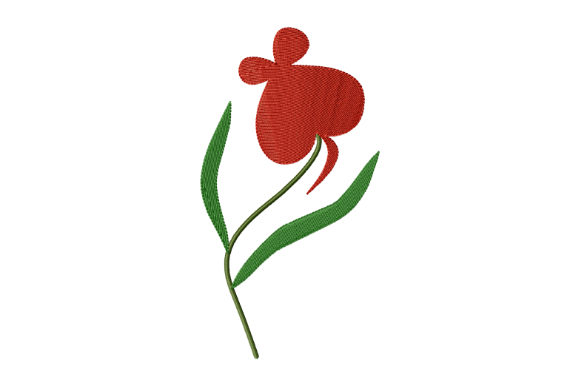
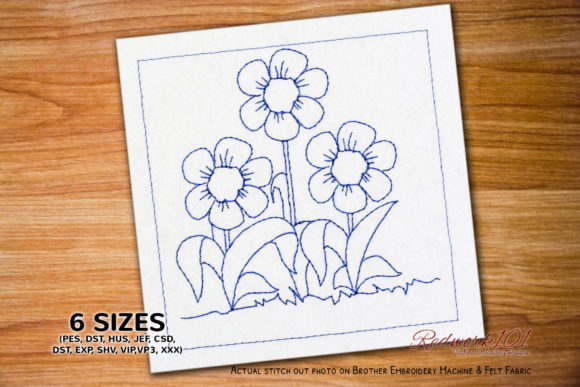
The Ava Flowers design reads as a gentle, refined floral with a romantic hand-drawn feel. It does not shout. It does not demand a giant placement area to make sense. From the first sew-out, I saw a design that would catch the eye of a shopper browsing a tidy craft fair table without overpowering the handmade product it decorates. The mood feels balanced between cottage charm and modern minimalism, which makes it extremely versatile across product types and fabric surfaces.
In person, the stitch flow creates a smooth, almost painted quality that photographs beautifully under natural booth lighting. That matters more than many sellers realize. A design that looks flat or muddled in listing photos will struggle to convert online, but Ava Flowers holds its clarity. The petal definition and gentle curve work give it enough presence to stand as a primary focal point without needing extra text or heavy bordering to complete the composition.
Where Ava Flowers Shines Across a Craft Fair Product Line
I ran test stitch-outs on several base products over the course of an afternoon, and a clear pattern emerged. This design works best on smooth to lightly textured surfaces where the thread detail can breathe. Here is how it performed across key product categories for market sellers.
Tote Bags and Market Bags
A natural canvas tote bag with Ava Flowers stitched in the lower corner or centered near the top edge creates an immediate grab-and-hold item. Shoppers pick up totes first at any craft fair, and a clean floral embroidery triggers the emotional connection that turns a browser into a buyer. The design sits well on both natural cotton and poly-blend canvas. I tested a slightly muted thread palette against an oatmeal-toned tote, and the contrast was soft but completely visible, which makes the bag feel finished and premium rather than printed or mass-produced.
Aprons and Kitchen Textiles
An apron with Ava Flowers placed on the bib or offset near the pocket adds just enough detail to elevate a plain garment into a gift-ready product. I tried the design on a linen-blend apron and a basic cotton twill version. The linen held the stitch with a beautiful organic texture, while the twill gave a crisper finish. Both worked. For tea towel embroidery, I recommend keeping the design scaled to a moderate size so it remains visible when the towel is folded over a rack or stacked at a booth. A pair of coordinating tea towels with this design in seasonal thread colors would make an approachable gift set at a handmade market.
Fabric Pouches and Small Accessories
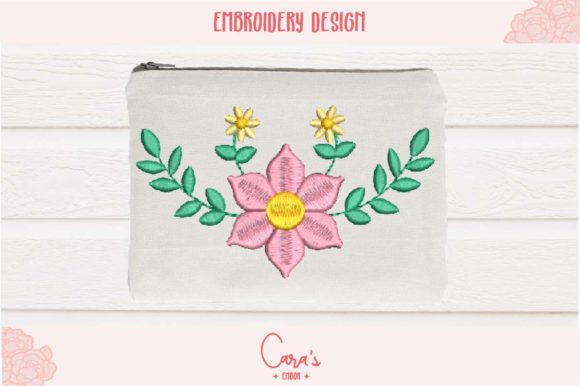
Small zippered pouches, drawstring bags, and cosmetic cases benefit enormously from a single floral accent. Ava Flowers scaled down slightly tucks beautifully onto a pouch front without distorting the fabric shape. I stitched one onto a quilted cotton pouch with a subtle metallic thread accent and watched several test-viewers reach for it instinctively. Small accessories at a craft fair table need a visual anchor, and this design provides exactly that without clutter.
Caps and Curved Surfaces
Embroidering on caps always introduces curvature challenges. I tested Ava Flowers on a structured dad cap with a medium-profile crown. The design held up reasonably well at a controlled size, but the fine petal details did soften slightly where the fabric curved most aggressively. I would suggest using a heavier stabilizer and running a slower machine speed for cap applications. It works, but the crispness benefits from extra attention during hooping. For a more reliable cap-friendly placement, position the design slightly higher on the crown where the surface stays flatter.
Pillow Covers and Home Décor
A linen pillow cover with Ava Flowers embroidered off-center feels instantly boutique. Home décor shoppers at craft fairs respond to texture, and the layered stitchwork on a natural woven fabric creates a tactile moment that invites touch. I stitched one on an envelope-closure pillow cover in a warm cream tone and placed it at the front of my mock booth setup. Several visitors paused longer at that display than at busier, more heavily decorated pieces nearby. The restraint of the single flower design worked in its favor.
Embroidered Patches
Making an embroidered patch from Ava Flowers requires some adaptation and a merrowed or satin-stitched border for a clean edge. I tested a standalone patch application on felt-backed stabilizer, and the design held its shape well. The petals did not collapse during the border stitch. For shop owners selling patches as low-cost impulse items near the register, this design offers a sweet, broadly appealing option that complements more niche or humorous patches in the same display bowl.
Practical Production and Selling Considerations
From a production standpoint, Ava Flowers stitches out efficiently. There are no overly dense fill sections that drag the machine speed down or cause thread breaks on reasonable fabric choices. The design has been tested and reviewed to ensure top quality, but as with any machine embroidery design, I strongly recommend you test stitch the design, or portions of it, before stitching it onto your final item, as results may vary depending on fabric and stabilizer. This is not a caution unique to this file. It is standard professional practice, and skipping it will cost you product and time at the worst possible moment.
Thread color selection dramatically shifts the perceived style of Ava Flowers. A dusty rose and sage green combination pulls it into farmhouse territory. A crisp white-on-natural or monochrome charcoal keeps it modern and minimal. A bright coral with golden-yellow centers makes it feel playful and spring-forward. Because the petal shapes remain distinct rather than blending into an indistinct mass, switching thread palettes between batches gives the same design fresh seasonal appeal without purchasing a different embroidery file.
Photography and Online Listing Strength
For Etsy seller and small shop product listings, this design photographs cleanly. There is enough dimension in the thread to catch side light and create a soft shadow, which signals handmade quality instantly. A flat-lay photo with a few dried flowers near the embroidered product reinforces the aesthetic without distracting from it. When building printable mockup assets for digital shop listings, a design that reads clearly at thumbnail size holds a major advantage, and Ava Flowers passes that test.
Careful-Use Notes and Production Cautions
No design suits every product equally. Through testing, I noted several areas where extra attention keeps Ava Flowers looking polished and saleable.
- Dense stitch areas on the flower center may pucker lightweight fabrics if not paired with adequate stabilizer. A mid-weight cutaway backing resolves this reliably.
- Tiny details in the petal edges begin to lose clarity below roughly a two-inch design width. Keep the design appropriately scaled for the product.
- Textured towels with deep ribbing or thick terry loops will swallow the finer stitch definition. Use a water-soluble topper or choose smoother tea towel surfaces for best results.
- Dark fabric applications demand higher thread contrast. A pale flower on black fabric looks striking but only if the thread density is sufficient to cover the background. Test on scrap fabric in the actual colorway first.
- Curved cap surfaces soften detail near the steepest arc. Adjust placement upward where the crown remains flatter, and slow the machine speed.
- Small lettering is not inherent to this design, but if you combine it with text elements, check alignment and spacing carefully as the design's organic curves can make text placement feel unintentionally tilted.
Booth Display and Buyer Engagement
At a busy craft fair, a shopper scans a table in seconds. Ava Flowers on a tote bag hung at eye level catches attention through shape recognition alone. Our brains process floral forms instantly, and a well-stitched flower stops a passing glance long enough for the seller to begin a conversation. I placed three products featuring this design at different heights on my mock display grid, a pillow cover on the top shelf, a tote bag hanging from a hook, and a small pouch in a basket at table level, and the visual flow felt cohesive. Buyers who stopped to look at one item often noticed the other pieces organically.
For boutique makers and handmade shop owners building a consistent brand look, a unified floral motif repeated across product categories strengthens recognition. Ava Flowers works as that unifying thread without feeling repetitive because thread color and scale adjustments between products create enough variety to keep each item feeling distinct.
Embroidery Designer Notes for Production Runs
When preparing multiple units for a market or wholesale order, consistency becomes everything. Here is my pre-production checklist for Ava Flowers based on what I observed during testing.
- Test the design on scrap fabric in the same weight and weave as your final product. Do not assume one test swatch covers all substrates.
- Check thread contrast under both bright booth lighting and softer indoor light. Colors shift, and you need the design to read well in both settings.
- Review spacing if combining this flower with other design elements. Leave enough visual breathing room around the petals.
- Confirm hoop size compatibility before starting a production batch. Measure the actual stitched area, not just the file preview dimensions.
- Inspect stitch density on your chosen fabric. Dense areas that look beautiful on cotton may feel stiff and heavy on lighter substrates.
- Use the right stabilizer for the product type. Cutaway for garments, tear-away for flat décor items, and water-soluble toppers for textured surfaces.
- Create at least one real mockup of each product type before committing to a full production run. A stitched sample reveals things a digital preview cannot.
- Compare fabric colors with the stitched flower. The same thread reads differently against cream, white, natural, and dyed backgrounds.
- Confirm commercial licensing before selling finished products. Review the digital embroidery file terms to ensure your intended use as a commercial embroidery seller is covered.
Is Ava Flowers Worth Adding to a Handmade Product Line
After a full round of testing and mock booth evaluation, my answer is a confident yes, with the caveat that placement and thread choice make the difference between a nice design and a quick-selling product. Ava Flowers rewards thoughtful application. It belongs on giftable kitchen textiles, fabric accessories, and soft home décor where an understated floral can elevate the perceived value of the item. It is less suited to high-impact statement apparel or tiny, highly detailed placements where the petal definition might cramp.
For the craft fair product seller who wants a reliable, repeatable floral that stitches cleanly, photographs well, and appeals to a broad handmade goods audience, this single flower embroidery design earns its place in the rotation. I have added it to my spring market product plan, and I expect it to move consistently once shoppers see it in person.